


The rapid development of the petroleum industry has brought about a thorny problem: oily sludge. These black pollutants produced during the processes of oil extraction, transportation and refining contain a large amount of toxic and harmful substances. They not only damage the structure and ecological functions of the soil, but also may pollute groundwater and threaten human health.
The traditional incineration and landfill treatment methods are not only inefficient but may also cause secondary pollution. Facing the increasingly severe environmental protection situation, oilfield enterprises urgently need an efficient, environmentally friendly and economical solution.
The hot washing process of oil sludge is an efficient and environmentally friendly technology for treating oil sludge. It achieves the reduction, harmless treatment and resource utilization of oil sludge by heating, washing and separating the oil sludge, thus separating the oil, water and solid substances in the oil sludge.
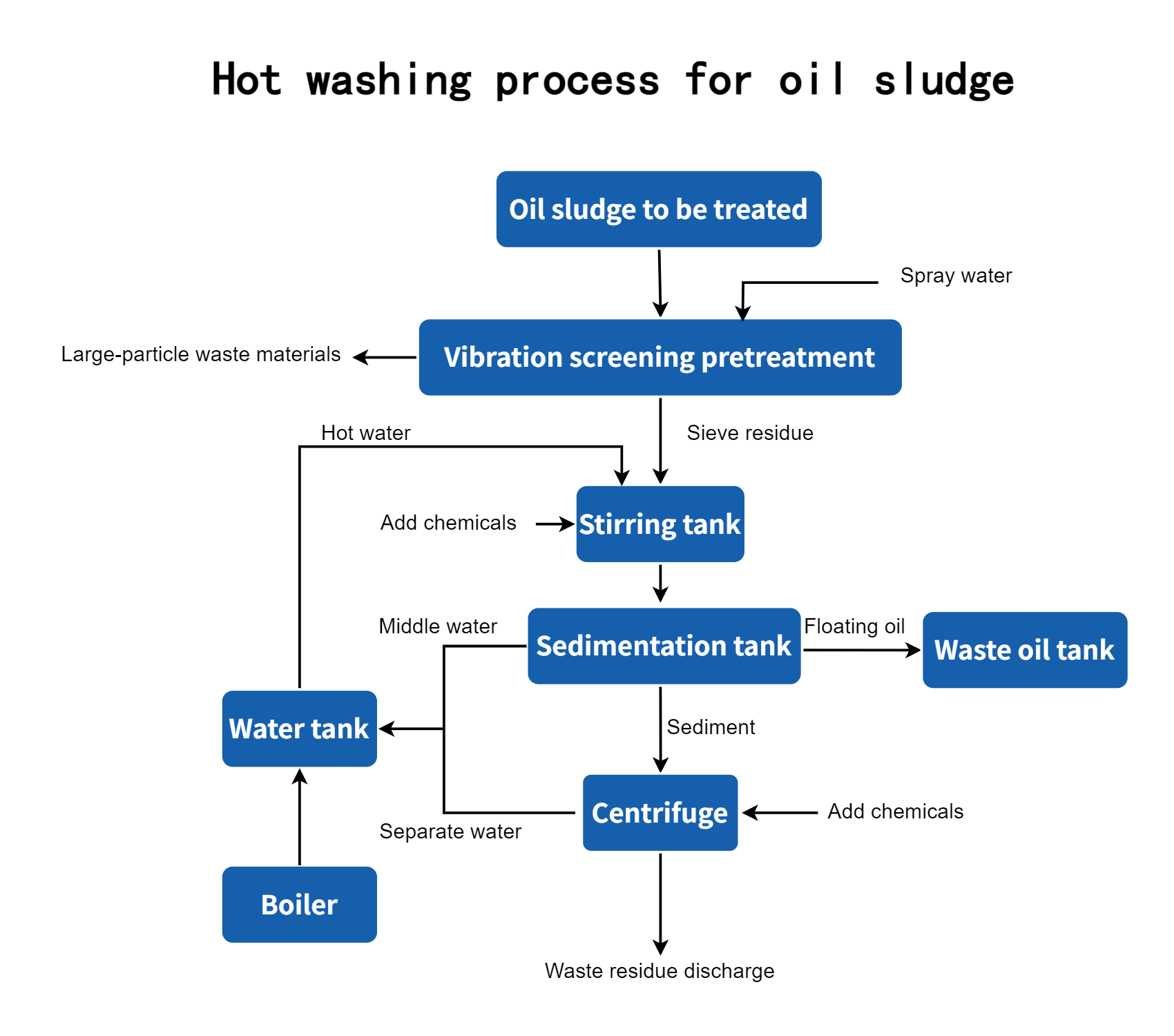
The hot washing process flow of oil sludge mainly includes the following steps:
1. Vibrating screen pretreatment: Screen the oil sludge to be treated to remove large particle waste. At the same time, add spray water to make the oil sludge more moist, which is convenient for subsequent treatment.
2. Mixing tank treatment: Put the sieved oil sludge into the mixing tank, add hot water and chemicals, and stir thoroughly. The agent can play a role in emulsifying, dispersing and dissolving the oil in the oil sludge, while hot water can increase the temperature of the oil sludge and accelerate the separation of the oil.
3. Sedimentation tank separation: Put the stirred oil sludge into the sedimentation tank for sedimentation separation. During the sedimentation process, the oil in the sludge will float to the water surface, forming floating oil, while water and solid substances will settle at the bottom of the tank. Floating oil can be transported through pipelines to waste oil tanks for recycling and reuse, while water can be transported through pipelines to water tanks for recycling and reuse.
4. Centrifuge separation: Place the sediment at the bottom of the sedimentation tank into a centrifuge for centrifugal separation. During the centrifugation process, water and solid substances in the sediment will be separated. The water can be transported through pipelines to the water tank for recycling, while the solid substances will be discharged and treated as waste residue.
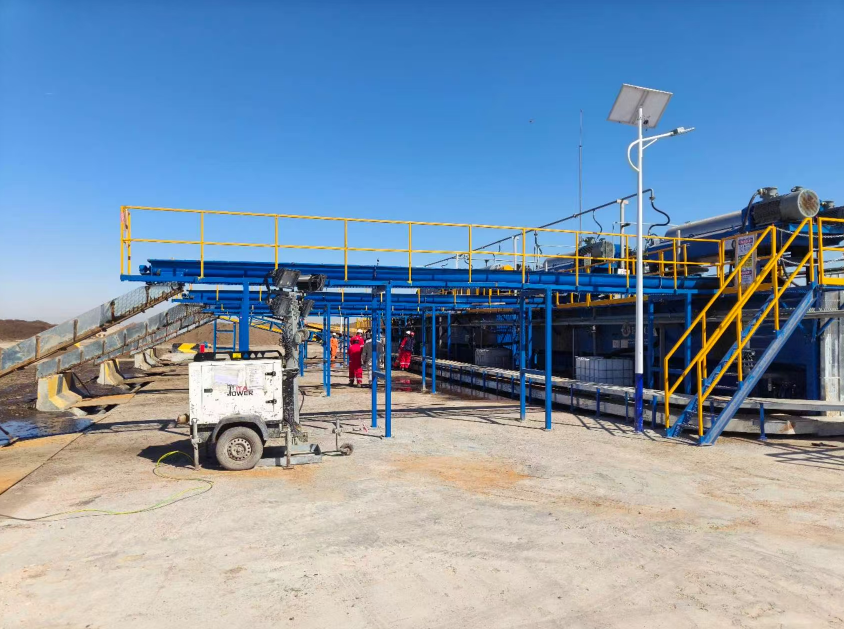
The hot washing process of oil sludge has the following advantages:
1. Environmentally friendly and pollution-free: The entire treatment process does not produce waste gas, wastewater or waste residue, and will not cause secondary pollution to the environment.
2. High resource utilization rate: The oil in the oil sludge can be recovered and reused, and at the same time, water and solid substances can be recycled, which improves the utilization rate of resources.
3. Low processing cost: Compared with traditional oil sludge treatment methods, the oil sludge hot washing process has a lower processing cost and a higher cost performance.
The hot washing process of oil sludge is an efficient, environmentally friendly, resource-efficient and low-cost oil sludge treatment technology. It can effectively solve the problem of oil sludge pollution and contribute to the sustainable development of the petroleum industry.