


KOSUN provides solid-liquid separation and sludge dewatering systems for river, lake, reservoir, and pipeline dredging applications.
The systems are designed to separate solids and liquids from dredged slurry, reduce sludge volume, and support the handling, transportation, and reuse of treated materials.
River and Lake Dredging
Sediment accumulation can reduce the effective flow section of rivers and affect flood control, drainage, irrigation, and the operation of related water infrastructure. Dredged sediment may also contain organic matter and pollutants that can affect water quality and aquatic environments.
KOSUN dredging sludge treatment systems provide an integrated solution for the separation and dewatering of dredged slurry.
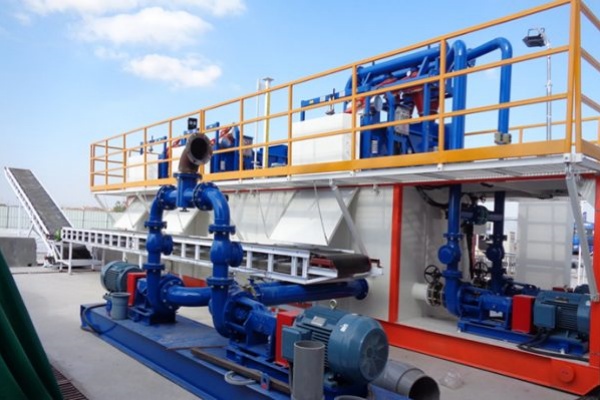
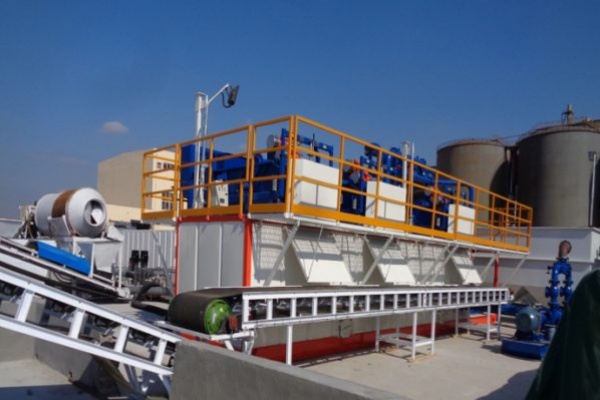
KOSUN Dredging Sludge Treatment System
The system can include shale shakers, desanders, desilters, decanter centrifuges, and other treatment modules. Depending on the characteristics of the material and project requirements, a 3- to 6-stage separation system can be configured.
The system is available in skid-mounted and truck-mounted configurations to suit different site conditions and project requirements.
Treatment Process
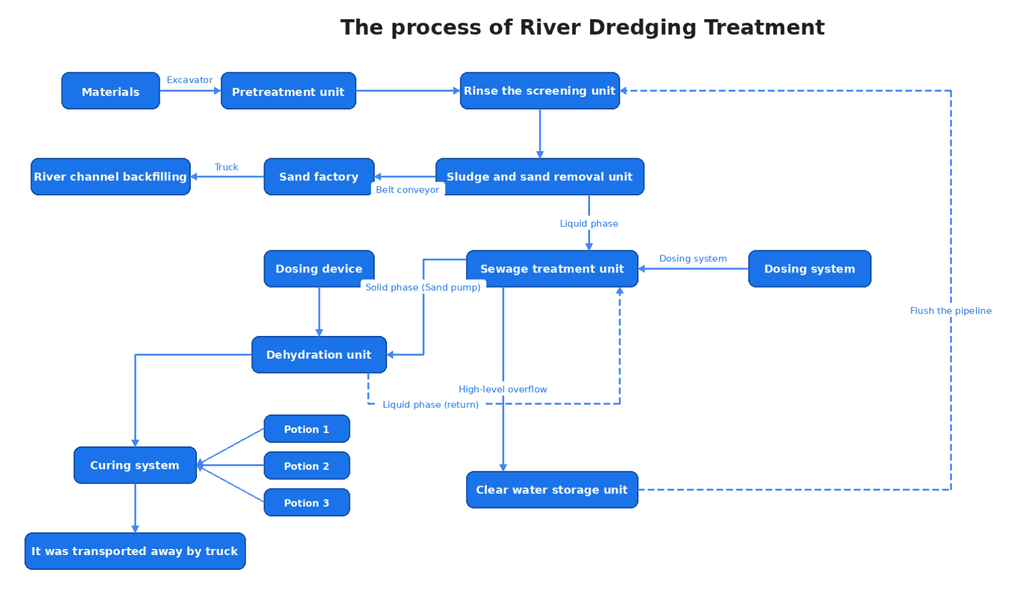
After pretreatment and screening, the slurry is further processed through sand and fine-solids separation. The separated sand can be collected for further handling, while the remaining slurry is processed through subsequent separation and dewatering stages.
Depending on the characteristics of the material, the separated liquid can be further treated and stored for reuse. Dewatered sludge can be transported for further treatment, disposal, or resource utilization according to project requirements.
Key Benefits
- Continuous and automated operation
- Solid-liquid separation and sludge dewatering
- Reduced sludge volume for transportation and storage
- Treated water can be reused after appropriate treatment
- Skid-mounted or truck-mounted configurations
- Flexible system configuration for different dredging conditions
Pipeline Dredging
KOSUN also provides sludge separation systems for pipeline dredging projects.
The system separates solid and liquid phases from dredging slurry through screening, hydrocyclone separation, and centrifugation. This helps prepare separated solids for transportation while allowing the liquid phase to be reused or further treated according to project requirements.
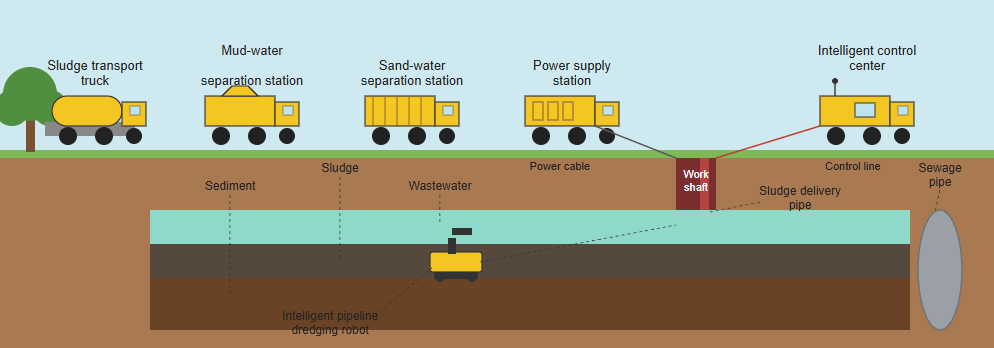
Pipeline Dredging System
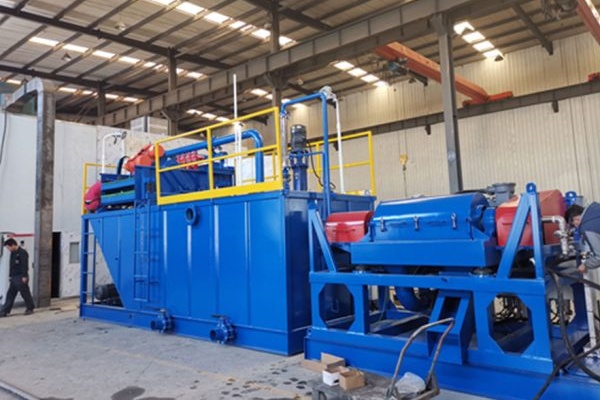
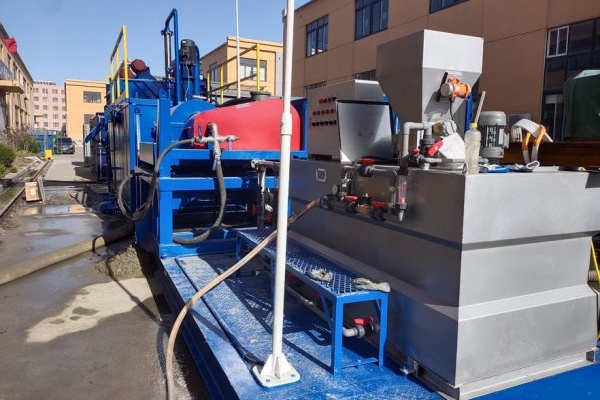
The system mainly consists of two separation stages:
Screening & Hydrocyclone Separation
The dredged slurry first passes through a shale shaker to remove larger sand and solid particles. The finer material then enters the hydrocyclone system for further separation.
Centrifugal Separation
The separated slurry is transferred to a decanter centrifuge for further solid-liquid separation. Solid particles are discharged as a dewatered fraction, while the liquid phase is collected for further handling or reuse.
Key Benefits
- Three-stage separation using screening, hydrocyclone separation, and centrifugation
- Effective separation of solid and liquid phases
- Modular system design for different site layouts
- Flexible installation and operation
- Suitable for different dredging and municipal construction applications
Applications
KOSUN dredging sludge treatment systems can be applied to:
- River Dredging — Treatment of slurry generated during river dredging and sediment removal.
- Lake & Reservoir Dredging — Separation and dewatering of sediment from lakes and reservoirs.
- Municipal Pipeline Dredging — Sludge separation for municipal pipeline cleaning and dredging projects.
- Municipal Construction — Solid-liquid separation for related construction and wastewater treatment applications.
- Mining Tailings — Separation and dewatering of slurry from mining and tailings treatment.
- Industrial Wastewater — Solid-liquid separation for sludge generated during industrial wastewater treatment.
KOSUN Dredging Sludge Treatment Solutions
From screening and hydrocyclone separation to centrifugal dewatering, KOSUN provides modular solid-liquid separation solutions for different dredging conditions.
System configuration can be adjusted according to material characteristics, site conditions, and treatment requirements.