

Industry Update

Industry news, technical insights, and updates on solids control, mud treatment, and waste management.

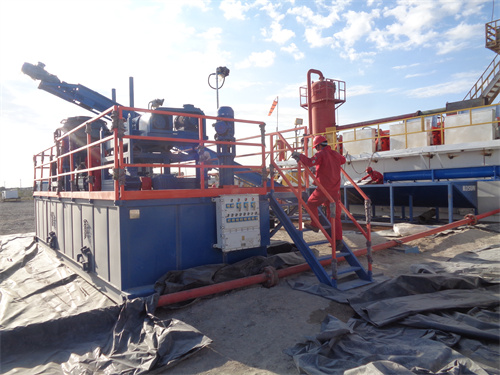
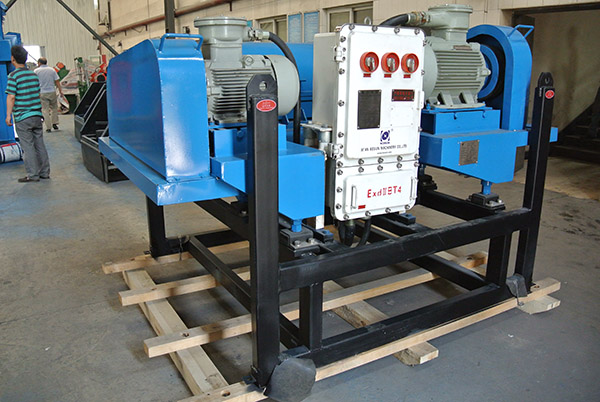
Application and Advantages of KOSUN Screw Discharge Sedimentation Centrifuge

KOSUNs horizontal screw discharge sedimentation centrifuge is used for separating and clarifying suspensions with solid particles of particle size d 2m, solid concentrations ranging from 2% to 70%, and liquid viscosity () 0.01Pas. It is also suitable for separating liquids containing small amounts of solid particles and amorphous materials that are difficult to regenerate on filter cloth and suspensions with a wide range of solid concentrations. This centrifuge is widely used in industries such as petroleum, chemical, food, pharmaceuticals, environmental protection, and others where solid-liquid separation is required. It can accomplish processes like solid-phase dewatering, liquid clarification, liquid-liquid-solid three-phase separation, and particle size classification. KOSUNs horizonta

Application and Advantages of KOSUN Screw Discharge Sedimentation Centrifuge Read More »
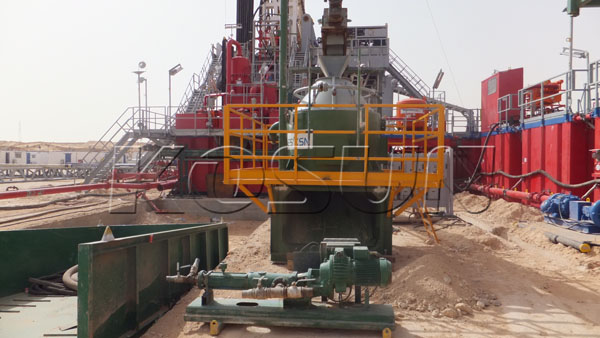
Application Principles of Drilling Mud zero discharge Technology

Drilling mud zero discharge technology is aimed at minimizing or eliminating the discharge of drilling mud or drilling waste into the environment during drilling operations. The principles of this technology involve the application of various strategies and techniques to achieve zero discharge. Here are some key principles commonly employed: 1, Source Reduction: The first principle is to minimize the generation of drilling mud and waste at the source. This can be achieved through careful planning and optimization of drilling processes, such as selecting appropriate drilling fluids, reducing the amount of additives used, and optimizing drilling parameters to minimize the generation of cuttings and waste. 2, Recycling and Reuse: One of the primary principles of zero discharge technology is t

Application Principles of Drilling Mud zero discharge Technology Read More »

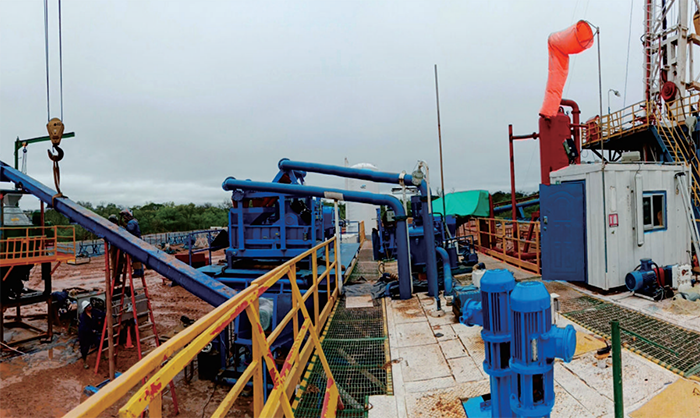
Drilling Waste Mud Treatment – Mud-Free Treatment System

Drilling waste mud is one of the main sources of pollution in the oil and gas industry. Due to engineering requirements, drilling mud contains a mixture of oil, water, organic clay, and other substances. In recent years, the use of oil-based mud, water-based mud, and composite-based mud has increased, leading to rising costs and environmental pollution issues. The emergence of mud-free treatment systems has successfully solved the problem of inefficient and environmentally unfriendly disposal of drilling waste. The main process of the mud-free treatment system involves treating the drilling waste that returns from the wellbore before it reaches the ground, rendering it harmless and preventing it from touching the ground. Alternatively, the waste mud in the waste mud pit can be diluted and

Drilling Waste Mud Treatment – Mud-Free Treatment System Read More »

The Fundamentals of Solids Control Equipment and its Significance in Various industries

In industries such as oil and gas drilling, mining, and construction, the management of solids in drilling fluids is crucial for efficient operations. Solids control equipment plays a vital role in this process by separating and removing unwanted solids from the drilling mud or fluid. Understanding the basics of solids control equipment is essential for industries looking to optimize their operations and reduce costs. In this article, we will explore the fundamentals of solids control equipment and its significance in various industries. 1, What is Solids Control Equipment? Solids control equipment refers to a range of machinery and systems designed to remove solids, such as drill cuttings, from drilling fluids or mud. These solids can cause various issues, including reduced drilling effic

The Fundamentals of Solids Control Equipment and its Significance in Various industries Read More »

×

Get a Free Quote