

Industry Update

Industry news, technical insights, and updates on solids control, mud treatment, and waste management.

Sources of drilling fluid additives

It is investigated that core products in mud system of the foreign-invested mud companies come from abroad. It is partly because they have their own research development and production base abroad, and further, domestic drilling fluid additives cannot conform to high standards. Low-end products with low technological content and cheap price are purchased locally, such as barite, bentonite, sodium chloride, xanthan gum, etc. This not only guarantees need of drilling engineering, but also achieves profit maximization of drilling fluid additives. For core products in mud system, drilling fluid companies affiliated with CNPC, Sinopec and CNOOC all have their own additives production base or cooperators, as well as independent R D team for new materials and products. They purchase conventional

Sources of drilling fluid additives Read More »
Main Drilling Fluid Types in the Chinese Market (II)

7) Gypsum drilling fluid Basic components: gypsum, SMC, SMP, SMT, FCLS, etc. Features: By use of the common ion effect, add gypsum to inhibit the gypsum dissolution in formation. 8) MMH drilling fluid Basic components: bentonite, mixed metal hydroxides (MMH), filtrate reducer and viscosity reducer Features: MMH can provide a unique rheological property and owns the strong ability of inhibiting the formation hydration dispersion; meanwhile, use filtrate reducer, which does not destroy MMH-clay complex structure, to control filtrate loss. 9) Potassium-silicon-based drilling fluid Basic components: KPAM, silicon stabilizer, silicon thinner, GKHm, SMP, and sulfonated asphalt products Features: use silicon to stabilize shale and reduce the water wettability of formation, with a strong inhibitiv

Main Drilling Fluid Types in the Chinese Market (II) Read More »

Main Drilling Fluid Types in the Chinese Market (I)

1) Solids-free non-dispersed polymer drilling fluid Basic components: polyacrylamide or multiple vinyl copolymer flocculant, inorganic salt, etc. Features: flocculant can effectively flocculate cuttings generated in the drilling process. 2) Anionic polymer drilling fluid Basic components: multiple vinyl copolymers, hydrolyzed polyacrylonitrile, partially hydrolyzed polyacrylamide, etc. Features: high molecular weight polymer encapsulates clay or cuttings and provides viscosity and shear force required for drilling fluid; medium and low molecular weight polymers can control filtrate loss, viscosity and shear force. 3) Cationic polymer drilling fluid Basic components: high and low molecular weight cationic polymer, starch, etc. Features: cationic polymer has the highly powerful ability of st

Main Drilling Fluid Types in the Chinese Market (I) Read More »

Advantages of Oil Base Drilling Fluid and Its Development History in China

Oil-based drilling fluid has such remarkable advantages as strong inhibitive ability, high temperature tolerance, good pollutant resistance, oil gas reservoir protection, good lubricating property, strong corrosion resistance, etc., has experienced the development history from crude oil, water-free oil base (diesel), water in oil (diesel), low colloid water in oil, low toxicity water in oil and water-free oil base (white oil), and presently serves as a primary means in drilling deep well, highly-deviated well, horizontal well and various complex strata. Since 1980s, oil-based mud is successively used at oilfields of Huabei, Xinjiang, Zhongyuan, Daqing, etc. Oil-based mud has a rather limited application in China due to its high cost, but many foreign countries have always been using oil-ba

Advantages of Oil Base Drilling Fluid and Its Development History in China Read More »

Development history of water-based drilling fluids in China’s oil drilling industry

During the period of 1920s~1960s, water-based drilling fluid was used. At that time, water-based drilling fluid was rather simple and the main type in this stage was dispersed water-based drilling fluid. (1) From 1921 to 1922, barite and iron oxide powder were used as weighting materials. (2) In 1926, bentonite was used as suspending agent. (3) In 1930, sodium tannate, the earliest mud treatment agent, was developed. (4) From 1931 to 1937, various mud measuring instruments were developed and the requirements on mud performance control were put forward. (5) From 1944 to 1945, Na-CMC (carboxymethyl cellulose) was applied as filtrate reducer in drilling fluid. (6) In 1955, FCLS (ferric chrome lignin sulfonate) was applied as thinner in drilling fluid. (7) Since the 1960s, a coarse dispersed w

Development history of water-based drilling fluids in China’s oil drilling industry Read More »

Current situation of drilling waste treatment and equipment development trend in foreign countries

Now, all major oil countries consider the development of drilling waste treatment technologies quite significant, and have had a head start in relevant treatment devices and equipment. Countries like U.S., Canada, France, etc. adopt four-stage solids control equipment in collecting drill cuttings and sludge, and later solidify or transport the subsequent waste. Due to its complex composition, strong stability, various birthplaces and different quality of well drilling waste, one fixed device and process cannot work effectively to manage all waste waters from different oilfields. Besides, conventional devices and techniques highly rely on chemical agents and cost much to manage different wastewater featured with high suspension, high COD, high salt, high chromaticity, etc. Those play a dete

Current situation of drilling waste treatment and equipment development trend in foreign countries Read More »

Temperature is an important control parameter in sewage treatment process.

Temperature is an important control parameter for sewage plants, especially in the North. In response to changes in temperature, sewage plants should take the initiative to manage operations rather than passively make adjustments. Only by understanding the laws of nature and the microbial habits, can we better utilize the characteristics of activated sludge, so that the sewage treatment can reach the standard under the environmental conditions as temperature changes. Sewage treatment relies heavily on the activities of microorganisms. When the water temperature rises by 10 degrees Celsius, the microbial activity will double. When the influent temperature is high and the microbial activity is doubled, the degradation ability of the microorganisms increases after the microbial activity incre

Temperature is an important control parameter in sewage treatment process. Read More »

Treatment effects of dual-deck linear shale shaker and mud circulation process in HDD projects

KOSUN double-deck linear shale shaker can achieve four treatment effects: 1. Can be used as a two-stage shale shaker; 2. The lower screen can be used as a shale shaker and the upper screen as an underflow shaker of desander; 3. The lower screen can be used as a shale shaker and the upper screen as an underflow shaker of desilter; 4. The lower screen can be used as an underflow shaker of desander and the upper screen as an underflow shaker of desilter. Thus, it can be used under various operating conditions for different treatment effects, which can achieve multiple functions, greatly reduce cost and save installation space. Recycling process: centrifugal pump transports mud from mud pit into logging tank of shale shaker. After being treated by coarse screen of shale shaker, large cuttings

Treatment effects of dual-deck linear shale shaker and mud circulation process in HDD projects Read More »

What are the working principles and main features of KOSUN single screw pump?

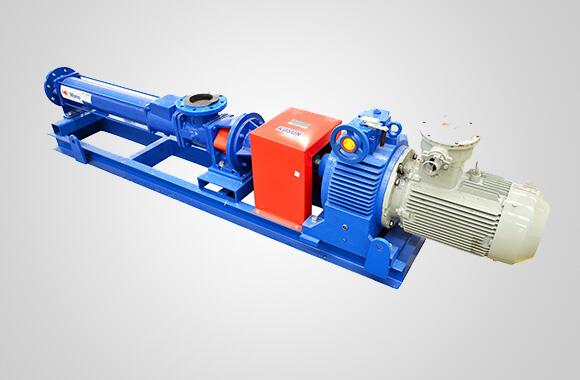
Screw Pump is an ideal pump used to feed drilling fluids to decanter centrifuge since drilling fluids is pushed to proceed along axial direction evenly. Therefore, the inner flow speed is kept low, volume unchanged and pressure stable so that vortex and agitation are prevented. Screw Pump is useful for wet mud drilling waste management and cuttings transportation. KOSUN single screw pump consists mainly of two parts engaged with each other like threads. The rotor is a rod-shaped part having an external thread, and the stator is a sleeve-like part having an internal thread. When the stator and the rotor are engaged with each other, a series of mutually non-intersecting sealed chambers are created which continuously advance from the suction end to the discharge end as the rotor rotates. KOSU

What are the working principles and main features of KOSUN single screw pump? Read More »

×

Get a Free Quote