

Industry Update

Industry news, technical insights, and updates on solids control, mud treatment, and waste management.

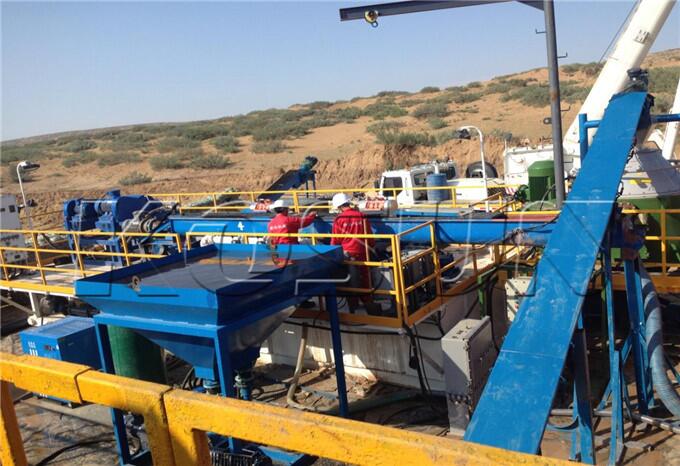
Drilling Mud Zero-discharge Treatment Process

Drilling waste mud is one of the primary pollution sources in the oil and gas industry. Due to engineering requirements, oil drilling mud is mixed with oil, water, organic clay and other materials. In the past two years, the drilling crew has been using more and more oil-based mud, water-based mud and composite-based mud, and the increase in cost and environmental pollution problems have become rather serious. The emergence of the mud zero-discharge treatment system successfully solved the problem that the drilling waste cannot be treated efficiently and environmentally. The main treatment process of the mud zero-discharge treatment system means that the drilling waste returned from the wellhead will be treated harmlessly while drilling before it falls to the ground. The waste mud in the w

Drilling Mud Zero-discharge Treatment Process Read More »
Why is mud dewatering necessary?

Mud is generally liquid or viscous before it is dewatered, which makes it difficult to be transported or temporarily stored, and is easy to spread and cause pollution. Therefore, the mud must be dewatered, and the dewatered water can be reused or discharged directly, so that the solid mud can be easily transported, the mud transport volume can be reduced, and the dewatered mud can be recycled, thus achieving the purpose of saving resources. In addition, the mud contains lots of solid particles such as sand and gravel. If it is discharged into rivers without being treated, it will pollute the rivers, causing sludge sedimentation in the rivers, and affects the living environment of the nearby residents, so the mud dewatering is imperative.

Why is mud dewatering necessary? Read More »

Drilling Waste Treatment System Workflow

The oil-base mud waste treatment system integrates screw conveyor , dryer , collection tank, cuttings box, screw pump , centrifuge and other equipment, suitable for waste mud treatment while drilling or after well completion and waste mud treatment station. KOSUN cuttings dryer is the core equipment for drilling waste treatment. Its working principle is a vertical scraper discharge filter deoiling centrifuge. It generates 400G centrifugal force at the speed of 900rpm and separates liquid from oil-containing cuttings to reduce the oil content in waste cuttings and achieve the maximum recycling of useful drilling fluids and the minimum environmental pollution. Since its launching on the market in 2011, it has been widely used at home and abroad and can meet such an industry standard as less

Drilling Waste Treatment System Workflow Read More »

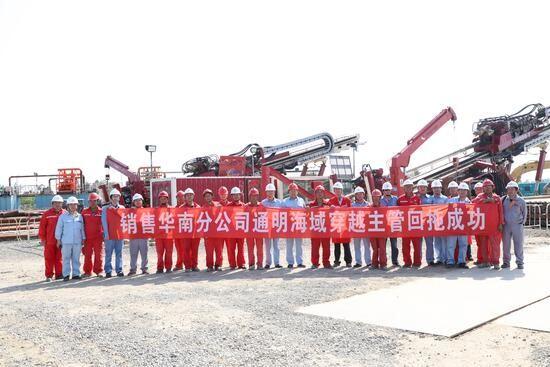
4071m! Successful directional crossing of the longest submarine oil product pipeline in mainland China

According to the Shanghai Securities News, the longest submarine oil product pipeline directionally crossed the Tongming Strait successfully in the mainland China on May 27. The directional crossing of Tongming Strait is the core project of ZRPC Integration supporting oil product pipeline project (from Zhanjiang to Beihai). The starting point is the Donghai Island of Zhanjiang City, and the end point is Huguang Town on the land on the opposite shore. It has such technical difficulties as complex engineering geology, high environmental protection requirements and limited prefabrication sites, and the total crossing length is 4071m, which becomes the longest submarine oil product pipeline of directional crossing in mainland China. The directional crossing project in the Tongming Strait is th

4071m! Successful directional crossing of the longest submarine oil product pipeline in mainland China Read More »

Application Status of Mud Treatment Equipment

In many regions of China, lots of construction piling mud, sand washing mud, drilling mud and mine tailings mud need dewatering treatment. However, the traditional natural sedimentation method is inefficient and the treatment effect is too poor to meet the production needs. Now, mud is often dewatered by mechanical equipment. The major mud treatment equipment on the market includes centrifuge , filter press and energy-efficient solid-liquid separator . As the requirements for mud treatment are becoming higher and higher, the frame filter is gradually replaced by other mud dewatering equipment due to its open treatment environment that easily causes secondary pollution. The composition and working principle of energy-efficient solid-liquid separator are as follows: The main feature of the e

Application Status of Mud Treatment Equipment Read More »

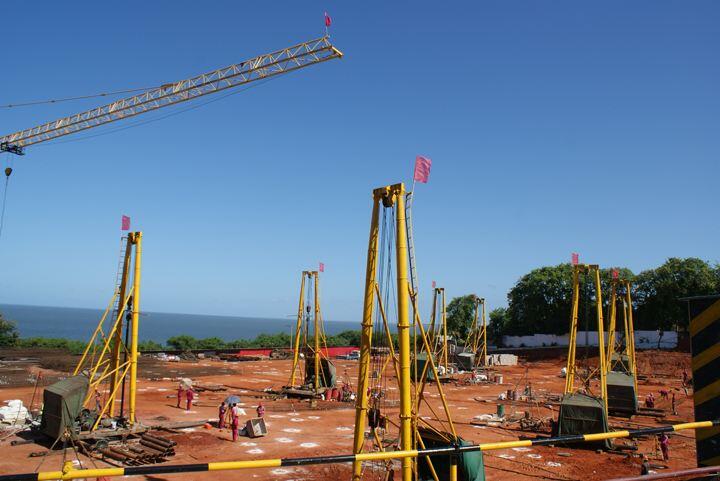
Application of KOSUN Slurry Treatment Equipment in Pile Foundation Construction

In the pile foundation project of urban construction, the slurry plays an important role in protecting the well wall, but the treatment of excess slurry has always been a problem that plagues the project construction. The current treatment method is to transport the on-site slurry to the wasteland in the suburbs with a tank truck and let it dry naturally, which is out-dated and causes many problems. Pile foundation technology is the cutting-edge trenchless technology. As one of the main systems in slurry piling (pile foundation), the slurry treatment system directly affects the construction progress and quality. One of the outstanding problems in the application of this technology is the treatment and reasonable utilization of slurry. The cast-in-place pile construction is divided into two

Application of KOSUN Slurry Treatment Equipment in Pile Foundation Construction Read More »

The first successful drilling waste resource utilization of polysulfonate mud in China

Drilling mud, also known as drilling fluid, plays a very important role in drilling operations and is considered to be the blood in oil drilling, but its chemical compositions are complex. Therefore, drilling waste mud is also one of the main pollution sources in the oil and gas industry. The harmless and resourceful treatment of drilling waste mud has become a significant technical problem in the process of oil and gas exploitation, and it is also the only way to achieve clean production and green development in oil and natural gas exploitation. At the Moxi 009-3-X3 Wellsite of Middle Sichuan Oil and Gas Field, PetroChina Southwest Oil Gasfield Company, the mud zero-discharge treatment equipment is placed on the side of the rigs solids control equipment . The treated mud is returned to th

The first successful drilling waste resource utilization of polysulfonate mud in China Read More »

Analysis of Market Competition Pattern and Development Prospect of Soil Remediation Industry in 2019

In 2019, the Soil Pollution Prevention and Control Law was officially implemented, and the supporting Technical Guidelines for Contaminated Land Risk Management and Soil Remediation Effect Assessment (Trial) and some other documents gradually normalize the technologies and remediation effects of the industry. Meanwhile, judging from the annual remediation funds appropriated by the central government, the budget in 2019 has experienced a transition after a decline, with a sharp increase of 42.9% to CNY5 billion, and the proportion of soil remediation funds among pollution prevention funds (atmosphere, water and soil) also grows from 7.95% in 2018 up to 8.33% in 2019. With the continuous improvement of laws regulations and the sufficient willingness of the central government to pay funds, po

Analysis of Market Competition Pattern and Development Prospect of Soil Remediation Industry in 2019 Read More »

Existing Problems in Sludge Treatment and Disposal

1. The target of sludge treatment and disposal is not clear. Sludge treatment and disposal should be aimed at reduction, stabilization, and harmlessness. Recycling is not the ultimate goal. The energy and materials in the sludge treatment and disposal process should be utilized as much as possible to achieve economic benefits, save energy and its resource value. 2. The technical route is applied mechanically. Sludge treatment technologies mainly include sludge concentration and dehydration, aerobic digestion, anaerobic digestion, drying, composting and incineration. Sludge disposal technologies mainly include landfill (including on ground, under ground and in water) and land utilization. 3. Pay attention to water, think little of sludge, and sludge treatment development lags. In recent yea

Existing Problems in Sludge Treatment and Disposal Read More »

×

Get a Free Quote