

Industry Update

Industry news, technical insights, and updates on solids control, mud treatment, and waste management.

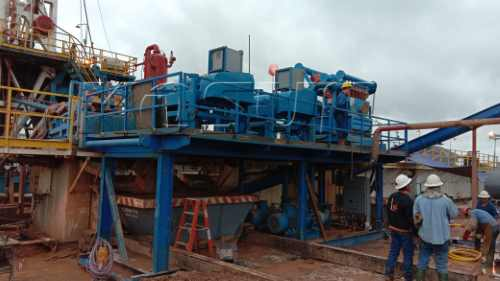
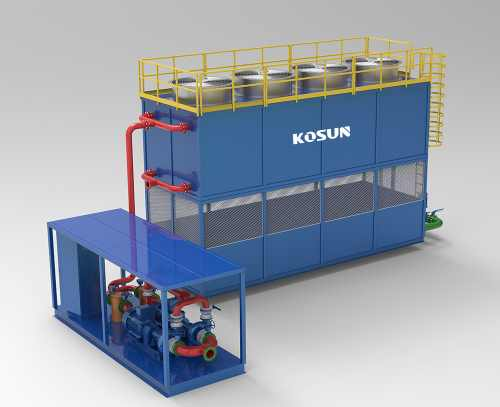
Eliminating "Fish Eyes" and Mitigating Formation Damage through Advanced Shear Pump Technology

In the formulation of high-performance drilling fluids, the oilfield shearing pump is indispensable for regulating rheological parameters. High-molecular-weight polymers (such as PAC and PHPA) are critical materials, but their ultra-high molecular weight often leads to partially hydrated agglomerates upon water contact. Without a high-efficiency shear pump, polymers and bentonite fail to receive the necessary mechanical dispersion, resulting in fish eyesmasses that are viscous externally but dry internally. This incomplete dissolution causes expensive chemicals to be wasted via shale shakers and triggers risks like wellbore instability and differential pressure sticking. Furthermore, these unhydrated particles can plug formation pores, leading to irreversible reservoir damage and reduced pr
Eliminating "Fish Eyes" and Mitigating Formation Damage through Advanced Shear Pump Technology Read More »

Analysis of Downhole Instrument Damage Mechanism by Harmful Solids and Solids Control System Solutions

In modern oil drilling, especially in deep and extended-reach drilling (ERD) operations, the management of solids content in drilling fluids is not only about mud performance but is also a core variable determining the lifespan of expensive downhole tools. As the kidney of the drilling rig, a premium Solids Control System is responsible for removing harmful solids and protecting precision instruments. Erosion Damage Mechanism of Harmful Solids on Precision Downhole Instruments During the drilling circulation process, drilling fluids inevitably contain a large amount of rock cuttings. According to research reports on the impact of sand content on downhole tool reliability published by the Society of Petroleum Engineers (SPE) , hard solid particles with a diameter greater than 20 microns are

Analysis of Downhole Instrument Damage Mechanism by Harmful Solids and Solids Control System Solutions Read More »

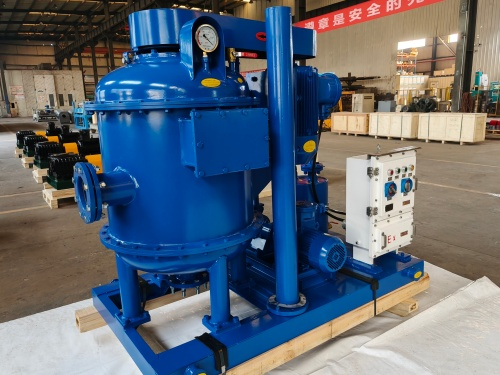
Drilling Mud Degasser and Mud Gas Separator Synergy for Well Control Safety

In upstream oil and gas exploration, drilling fluid serves as the critical barrier for maintaining downhole pressure. However, when the drill bit encounters high-pressure formations, gas intrusion into the mud circulation system creates highly destructive gas-cut mud. Improper handling can lead directly to well control failure or even a catastrophic blowout. To ensure operational safety under Health, Safety, and Environment (HSE) management systems, the industry employs two key lines of defense: the Mud Gas Separator for emergency high-concentration gas cut, and the Drilling Mud Degasser for the removal of routine trace gases. Density Drop and the Chain Collapse of Bottom-Hole Pressure The core hazard of gas cut lies in the reduction of hydrostatic pressure. Due to the high compressibility

Drilling Mud Degasser and Mud Gas Separator Synergy for Well Control Safety Read More »

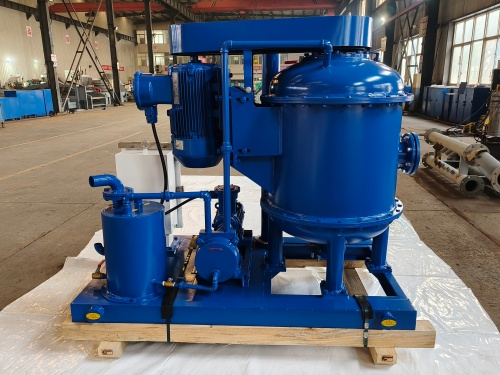
How Vacuum Degassers Extend the Service Life of Mud Pumps and Centrifuges

Against the backdrop of the global drilling industrys pursuit of cost reduction and efficiency enhancement in 2026, minimizing Non-Productive Time (NPT) has become a core objective. Beyond controlling solids content, eliminating micro-bubbles from drilling fluids is critical to protecting expensive solids control assets and reducing maintenance expenditures. Pre-treatment via a Vacuum Degasser is, in essence, a high-yield investment in asset integrity. Microscopic Cavitation Damage to Precision Metal Surfaces When gas-cut mud enters centrifugal pumps or high-speed decanter centrifuges, it triggers destructive cavitation. As gas bubbles collapse abruptly in high-pressure zones, the resulting shockwaves repeatedly strike impellers and bearings. Originally smooth metal surfaces become pitted l

How Vacuum Degassers Extend the Service Life of Mud Pumps and Centrifuges Read More »

Inconsistent Feeding Leading to Low Centrifuge Efficiency? Discover the Three Core Advantages of Progressive Cavity Pumps

In the fields of oil drilling, trenchless engineering, and industrial wastewater treatment, decanter centrifuges are precision instruments essential for solid-liquid separation. However, many field operators face a common frustration: even when the centrifuge speed is normal, the discharge solids content fluctuates, the sludge dryness is inconsistent, and vibration alarms are frequently triggered. The root cause often lies not with the centrifuge itself, but in the feeding stage. If the feed is unstable, the centrifuge cannot maintain a balanced state of separation. This article provides an in-depth analysis of the three core advantages of using screw pump s to solve centrifuge efficiency issues. Stabilizing Centrifuge Performance via Screw Pump Constant Pressure The working principle of a

Inconsistent Feeding Leading to Low Centrifuge Efficiency? Discover the Three Core Advantages of Progressive Cavity Pumps Read More »

×

Get a Free Quote