


In modern petroleum drilling engineering, as environmental regulations become increasingly stringent, the effective treatment of oily drill cuttings has become a focal point. As the core equipment of the drilling waste management system, the vertical dryer has become the key to achieving mud recovery and waste reduction through its superior solid-liquid separation performance.
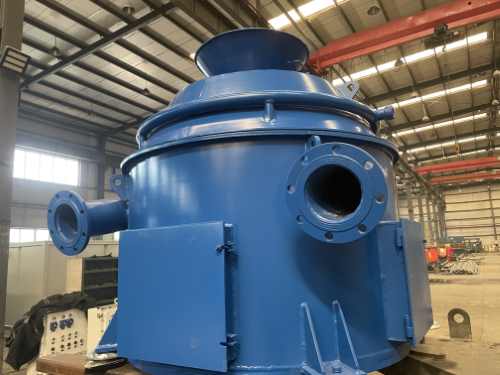
Definition and application scenarios of vertical dryer
A vertical dryer is primarily used to treat cuttings generated during drilling processes using oil-based mud (OBM) or synthetic-based mud (SBM). Its core objective is to strip and recover the liquid adhering to the surface of the cuttings using the immense centrifugal force generated by high-speed rotation. This process achieves solid-liquid separation, resulting in drier solids and a significantly reduced oil content on the waste.
Detailed working principle of vertical cutting dryer
Feeding and acceleration: Oily drill cuttings are fed into the top inlet of the vertical cutting dryer via conveying equipment such as a screw conveyor. Upon entering the equipment, the cuttings drop into the center of the high-speed rotating basket.
Centrifugal separation: The rotor of the vertical dryer rotates at high speeds, generating a centrifugal force typically ranging from 300G to 900G. Under this intense force, the oil-based liquid passes through the screen gaps and enters the collection tank, while solid particles are retained on the inner side of the screen.
Mechanical scraping: To prevent solids from clogging the screen, the vertical dryer features internal rotating scrapers. There is a slight speed differential between the scrapers and the screen basket, which allows the dried solids to be scraped off and move toward the discharge outlet at the bottom.
Liquid recovery: The expelled liquid is discharged through the liquid outlet. Typically, the liquid recovered by the vertical dryer is sent to a downstream decanter centrifuge for further purification before being reintroduced into the active mud system for reuse.
Key technical parameters of vertical decanter centrifuge
To achieve optimal treatment results under the latest environmental standards, the following parameters of the vertical dryer are critical:
Screen gap: Typically selected based on the geological formation and lithology.
Centrifugal force: Higher rotational speeds yield better dehydration, but place higher demands on the equipment’s balance and wear resistance.
Scraper durability: Since drill cuttings are highly abrasive, high-performance vertical dryer scrapers are usually reinforced with tungsten carbide or other hard alloys to extend their service life.
Through efficient physical separation, the vertical dryer not only solves environmental discharge challenges in oilfield operations but also saves drilling contractors significant material costs through high-ratio mud recovery.