


In the slurry solid control system, after the vibrating screen completes the separation of coarse particles, the coordinated action of the desander and the centrifuge becomes the key link to achieve precise classification of solid particles. Through different separation principles and classification treatments, the solid particles in the mud are efficiently separated by particle size, which not only ensures the stable performance of the drilling fluid but also significantly improves the utilization rate of resources and environmental benefits.
I. Working Principles of Desander and Centrifuge
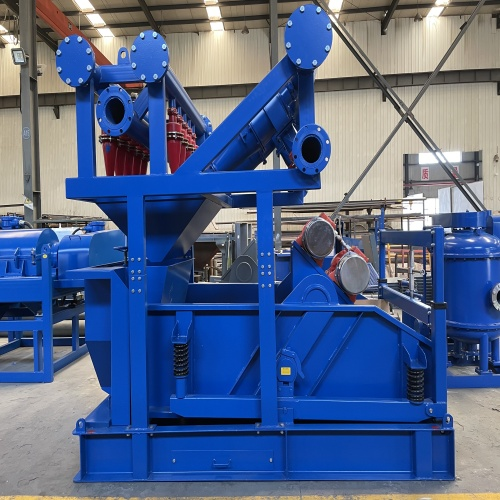
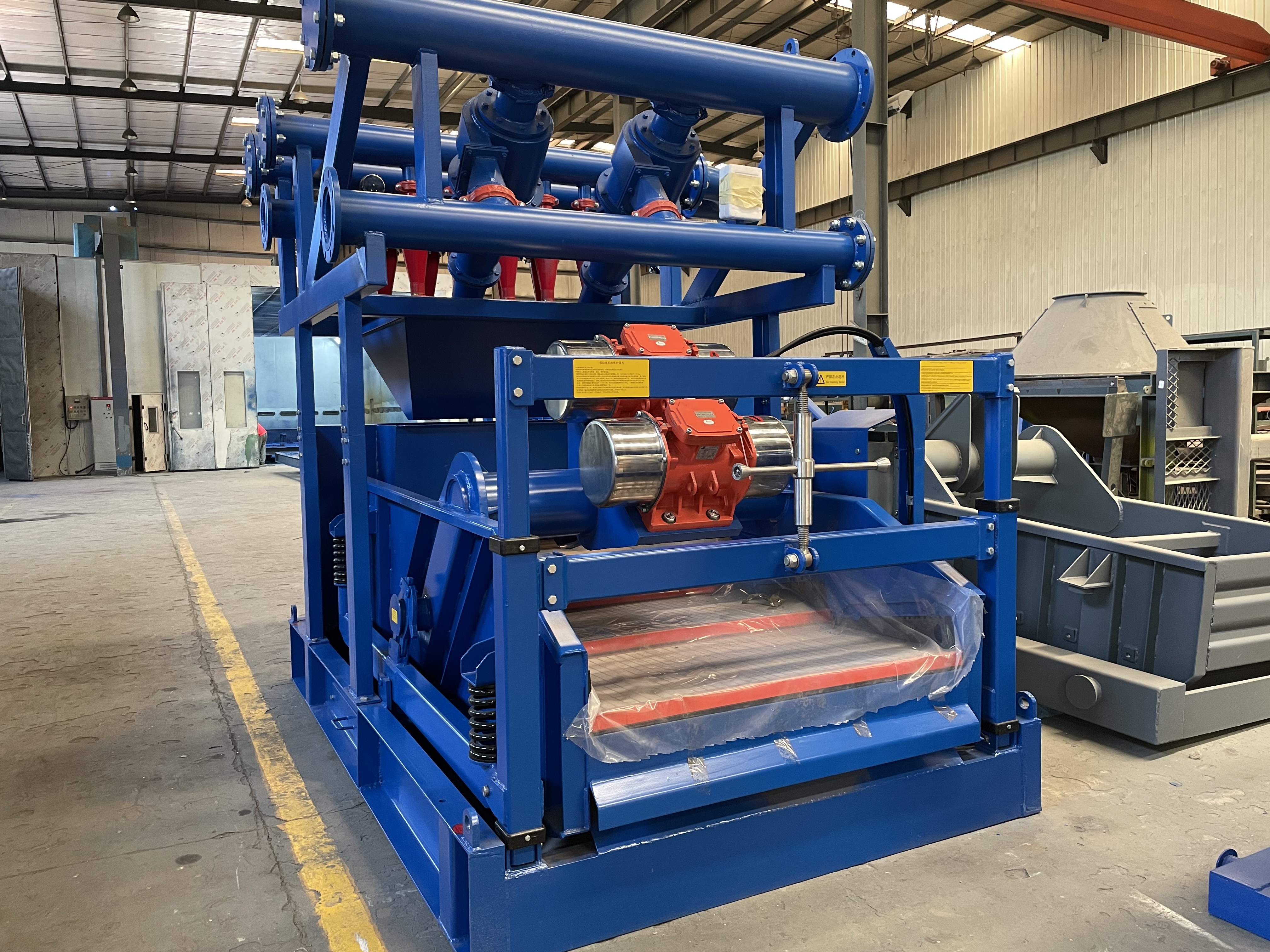
Desander: Separation of medium particles under centrifugal force field
Working principle: The solid-containing slurry enters the cyclone in a tangential direction. Under the centrifugal force field generated by high-speed rotation, the denser solid particles (76-47μm) are thrown towards the wall of the cyclone and discharged downward along the cone, while the liquid phase and fine particles are discharged from the central overflow pipe.
Technical features: Processing capacity 50-200m³/h, separation efficiency depends on the feed slurry pressure (0.2-0.4MPa), cyclone diameter (8-12 inches), and sand discharge port size (1/4-1/2 inch).
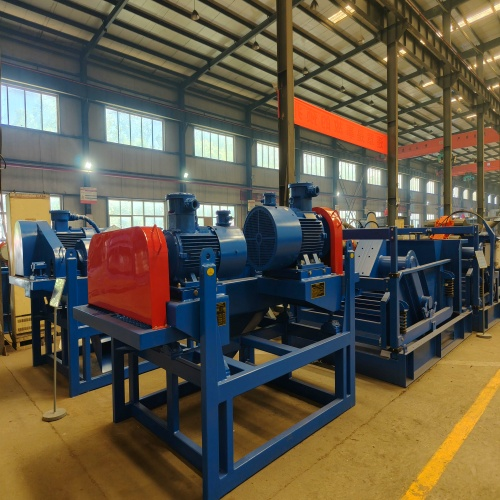
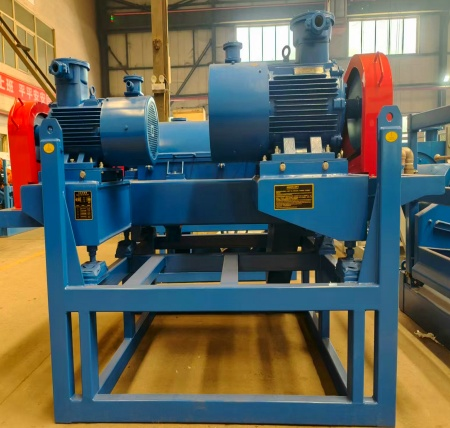
Centrifuge: Fine separation through ultra-high-speed rotation
Working principle: The slurry enters the high-speed rotating drum (3000-5000 RPM), generating a strong centrifugal force to separate ultrafine particles (<15μm) from weighting agents such as barite. The liquid phase is discharged through the overflow port, and the solid phase is conveyed to the slag discharge port by the screw conveyor.
Technical advantages: The separation accuracy can reach 5μm, the barite recovery rate exceeds 90%, and the material loss is significantly reduced.
Ii. Synergistic Mechanism: "Classification – purification – circulation" in a trinity
Classification treatment: The desander serves as the pretreatment unit
The desander prioritizes the separation of medium particles larger than 74μm, which can reduce the processing load of the centrifuge by 30-50%. Data from a certain shale gas project shows that the processing capacity of the centrifuge after pretreatment has dropped from 150m³/h to 80m³/h, and the service life of the equipment has been extended by 20%.
Deep purification: The centrifuge achieves fine control
After being treated by the desander, the solid content of the mud was reduced to below 8%. The centrifuge further reduced the content of particles smaller than 15μm from 12% to within 5%, significantly improving the rheological properties of the drilling fluid.
Resource recycling: A win-win situation for economic benefits and environmental protection
The collaborative system can achieve a barite recovery rate of over 90%, and the moisture content of rock cuttings after dehydration is less than 30%. It can comprehensively reduce the cost of mud by 25-40% and cut the discharge of hazardous waste by more than 40%.
Iii. Equipment Selection and Maintenance Guide
Selection suggestions
Desander: Polyurethane wear-resistant cyclone is preferred, and the processing capacity should cover the maximum drilling displacement (120%).
Centrifuge: Select the dual-motor drive model based on the density of the slurry. The material of the drum needs to be corrosion-resistant
Key points of maintenance
Daily inspection: Cyclone wear condition, centrifuge vibration value
Regular maintenance: Lubricate the bearings weekly and replace the seals monthly
Anti-clogging measures: Install 100 front-mounted filters and configure an automatic backwashing device
Hierarchical collaboration doubles efficiency
The collaborative effect of the desander and the centrifuge is essentially an art of balancing "efficiency and precision". The former rapidly separates medium-sized particles through centrifugal force, while the latter achieves ultrafine purification through ultra-high-speed rotation. Both are indispensable. In the modern drilling field that pursues cost reduction, efficiency improvement and green low-carbon development, optimizing the collaborative mechanism of this "golden pair" will inject continuous vitality into the mud solid control system.