With increasingly strict global environmental protection regulations, the efficient treatment of oily sludge has become an important issue in the petrochemical industry. As a major oil-producing region in the world, the Middle East generates a large amount of oily sludge during the processes of oil extraction, transportation, storage and refining. The main sources include drilling mud and crude oil separation residues from oilfield exploitation, bottom sludge from storage tanks in refineries, waste residue from oil pipelines, and contaminated soil due to leakage. According to statistics, the Middle East generates over several million tons of oily sludge every year. If not properly treated, it will seriously threaten the ecological environment.
The hazards of oily sludge: Oil sludge has a complex composition and contains pollutants such as petroleum hydrocarbons, heavy metals, and toxic organic substances. If it is directly landfilled or piled up, it will lead to soil pollution, groundwater pollution, air pollution, cological risks, etc.
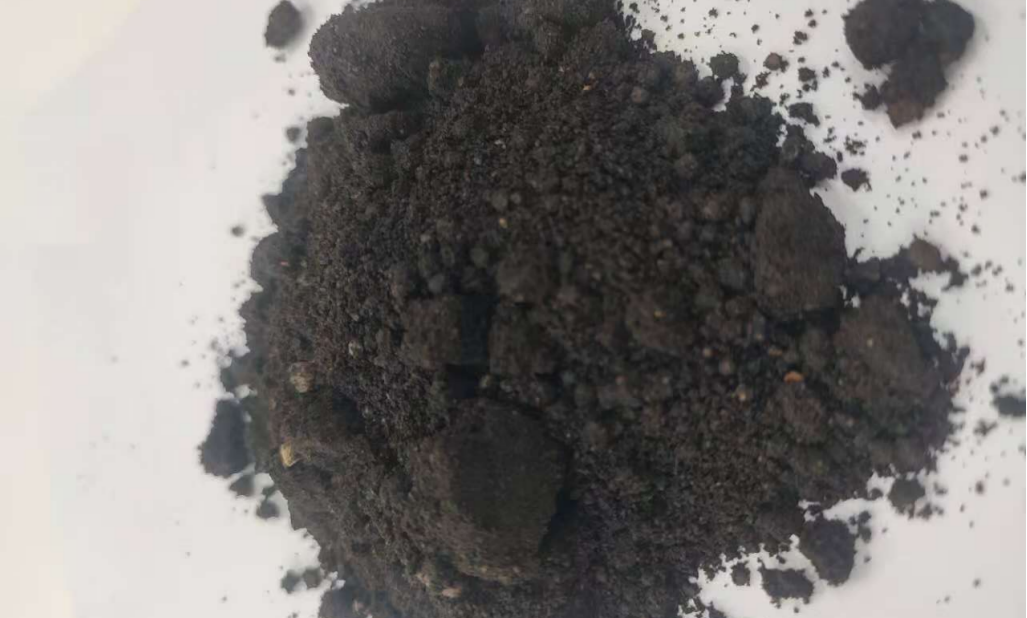
The Xi 'an KOSUN oily sludge treatment system adopts advanced cleaning and separation technology, with a processing capacity of 50 tons per hour and an annual processing capacity of 200,000 tons. It achieves efficient separation of oil, water and solid phase, meeting the dual demands of environmental protection and resource recovery. The main components of oil sludge include sand (65%), soil (5%), coke (7%), and oil (23%). The treatment objective is to achieve a solid oil content of no more than 2%, facilitating subsequent biodegradation, water phase reuse, reducing fresh water consumption, oil phase recovery, and enhancing resource utilization.
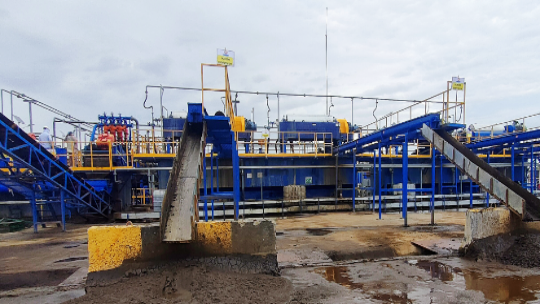
The processing technology involves the raw materials being uniformly conveyed to the sand washing machine through the feeding hopper of the feeding mechanism, the feeder, and the belt conveyor. At the same time, chemicals are added and high-temperature hot water is used for stirring and cleaning. The large particle materials after cleaning enter the vibrating screen for dewatering and screening, while the other oily materials are conveyed to the next processing equipment for sand and mud removal and separation. After the mud and sand are processed, the materials enter the centrifuge for oil and water separation. Meanwhile, the boiler heats the water tank to keep the system water at a certain temperature all the time, ensuring that the oil sludge treatment is efficient, environmentally friendly and energy-saving.
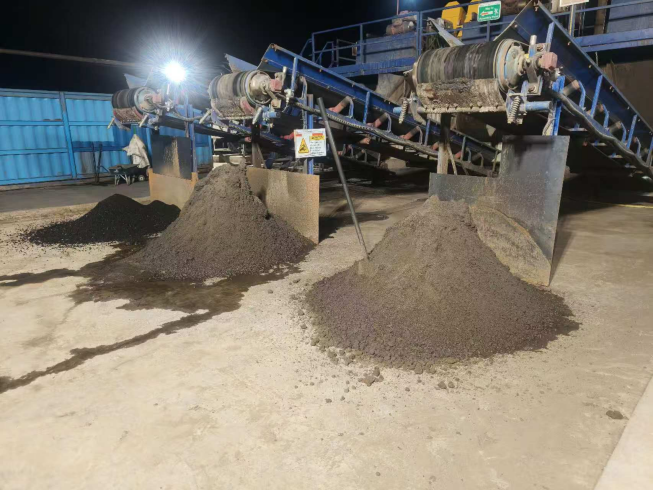
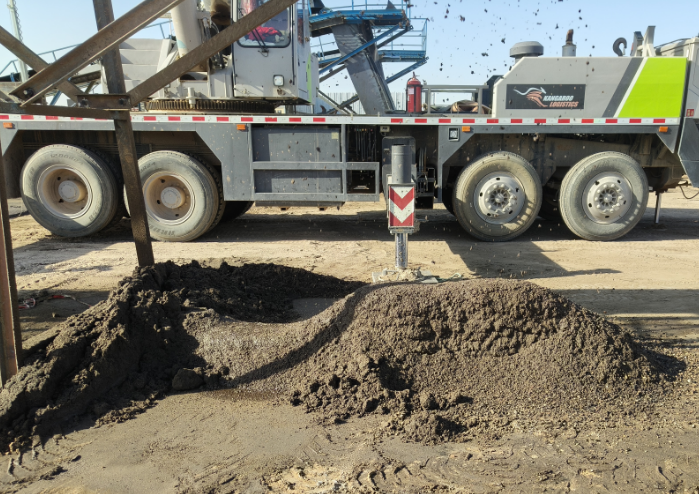
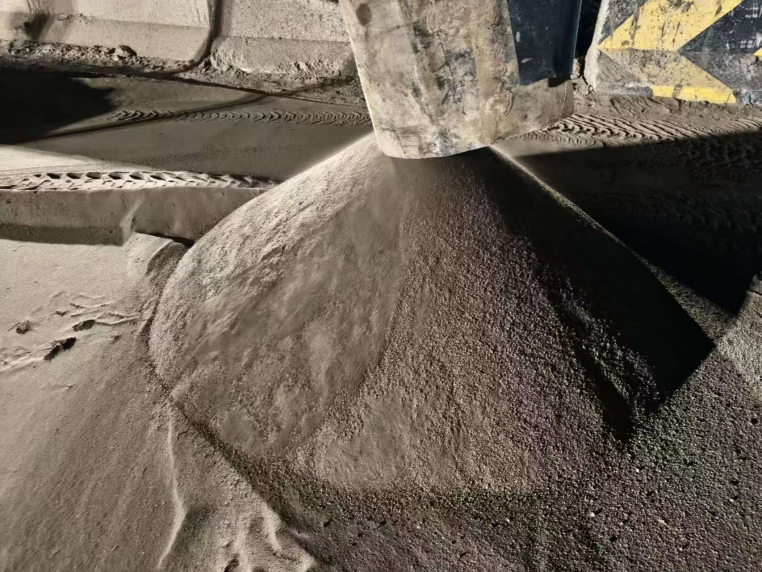
Solid phase of vibrating screen Centrifuge solid phase Solid phase in a spin dryer
The technical advantages enable it to efficiently handle a processing capacity of 50 tons per hour, meeting the demand for large-scale oil sludge disposal. The solid oil content is ≤2%, satisfying environmental protection emission standards. It features a high oil recovery rate, water recycling, reducing operating costs. The high-temperature hot water circulation system is energy-saving and environmentally friendly, reducing energy waste and conforming to the concept of green production.
An efficient and environmentally friendly solution for the resource utilization of oily sludge is applicable to the treatment of oily sludge in industries such as oil extraction, refining and chemical processing, and storage and transportation, especially suitable for the disposal of high-sand-content oil sludge in the Middle East. The project not only solved the problem of oil sludge pollution, but also achieved "turning waste into treasure", promoting the development of a circular economy.