

- Home
- Products
-
-
Solids Control Equipment
- Linear Motion Shale Shaker
- Decanter Centrifuge
- Vertical Cuttings Dryer
- Mud Cleaner
- Vacuum Degasser
- Centrifugal Pump
- Shear Pump
- Submersible Slurry Pump
- Mud Agitator
- Mud Gun
- Jet Mud Mixer
- Desilter
- Water Tank
- LS606 Shale Shaker
- Mud Tank
- LS1850 Shale Shaker
- Diesel Tank
- Dome-shaped mud cleaner
- Vertical cyclone desilter
- VC700 Vertical Cuttings Dryer
-
Solids Control System
- Solids Control System
- Arctic Solids Control System
- Mobile Solids Control System
- Liquid Mud Plant (LMP )
- Drilling Mud Cooling System
-
TBM
- KD-500 Slurry Separation System
- Tunnel Boring Mud System
-
HDD
- HDD Mud Recovery System
-
-
- News
- Services
- Marketing
- About Us
- Contact Us
- Videos
Home > KOSUN News >
Linear Motion vs. Balanced Elliptical Motion Shale Shakers: Key Differences Explained
Jun 23, 2026
Efficient separation of drilled solids from drilling fluid is essential in drilling operations, and shale shakers are the first line of defense in solids control. The two most common types are linear motion and balanced elliptical motion shale shaker. While both remove drilled solids, they differ in motion, efficiency, and ideal applications.
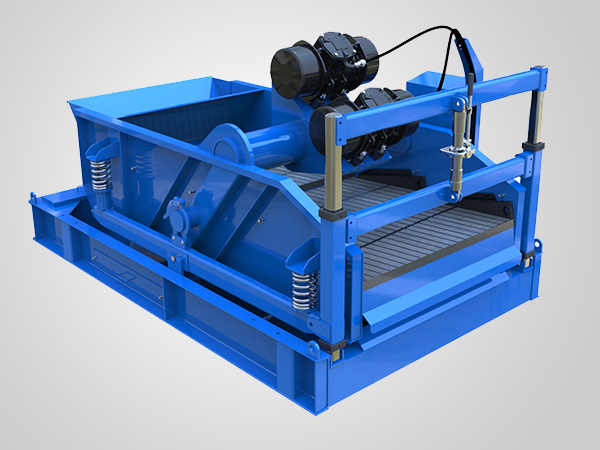
Understanding Linear Motion Shale Shakers
Linear motion shale shaker uses a straight-line vibrating action created by two counter-rotating motors. This produces a strong, directional force that moves solids uphill while allowing drilling fluid to pass through the screen.
They generate high G-forces (often above 5 Gs), making them highly effective for high-viscosity and high-solids drilling fluids such as oil-based muds. The aggressive motion helps prevent screen blinding and delivers a drier cuttings discharge, reducing waste and improving efficiency.
However, the high-intensity vibration can reduce screen life and may limit the use of very fine mesh screens due to increased wear.
Understanding Balanced Elliptical Motion Shale Shakers
Balanced elliptical motion shale shaker creates an elliptical or circular vibration pattern that distributes energy more evenly across the screen.
This gentler motion improves screen longevity and reduces operating costs. The rolling and scrubbing action is especially effective for sticky formations like gumbo, helping keep the screen clean and reducing plugging.
These shakers perform well in top-hole drilling and with water-based muds where solids control demands are less severe. However, they may produce a wetter cuttings discharge and are less aggressive in removing fine solids under heavy loads.
Direct Comparison: Linear vs. Balanced Elliptical
When directly comparing these two technologies, the choice often comes down to a balance between separation power and operational longevity.

Linear motion shale shaker offers superior separation efficiency and drier cuttings, making them the go-to choice for demanding applications, deep wells, and fluids with high solids content. Their ability to handle finer screen meshes effectively makes them ideal for closed-loop drilling systems.
Balanced elliptical shaker, with its longer screen life and excellent gumbo-handling capabilities, provides a more economical solution for many land-based operations, top-hole sections, and less critical drilling phases. Their lower maintenance requirements and gentler operation lead to significant cost savings.
The decision is not always mutually exclusive. Many modern drilling operations employ a multi-shaker setup, using a balanced elliptical shaker as a scalper to remove large cuttings and gumbo, followed by a linear motion shale shaker for fine screening. This hybrid approach leverages the strengths of both technologies to optimize overall system performance and cost-effectiveness.
Key Selection Criteria for Your Operation
Selecting the right shale shaker motion depends on drilling conditions and operational needs.
First, consider drilling fluid type. For oil-based muds, a linear motion shaker (LS Series) with higher G-force (6.5–7.2G) is preferred for stronger solids separation and drier cuttings. For water-based muds, a balanced elliptical shaker (ES Series) (5–6.3G) offers longer screen life and lower operating cost.
Second, evaluate geological formations. Sticky, gumbo-like shales are better handled by balanced elliptical motion due to their anti-blinding, self-cleaning action. Harder and more abrasive formations suit linear shakers, which provide stronger conveyance and more efficient solids removal.
Third, assess flow rate and solids load. Elliptical shakers handle high flow rates up to 170 m³/h effectively, while linear shakers manage 113–170 m³/h with better fine-solids separation and finer screen capability.
Finally, consider long-term costs such as screen wear, energy use, and downtime. Elliptical units reduce maintenance costs, while linear shakers deliver higher performance in demanding applications requiring drier cuttings.
Conclusion
Shale shaker technology continues to evolve, but the core difference between linear and balanced elliptical motion remains central to solids control strategy.
Proper selection based on fluid type, formation, and operating conditions ensures better efficiency and cost control.
KOSUN offers both LS Series Linear motion shale shaker (6.5–7.2G) and ES Series balanced elliptical shakers (5–6.3G). Linear units excel in high-demand drilling, while elliptical systems are ideal for gumbo-prone formations and extended screen life.
Choosing the right system improves solids control, protects equipment, stabilizes drilling fluids, and enhances overall drilling performance.
